
DRAWINGS ↓
Common Ground
THE VALLEY
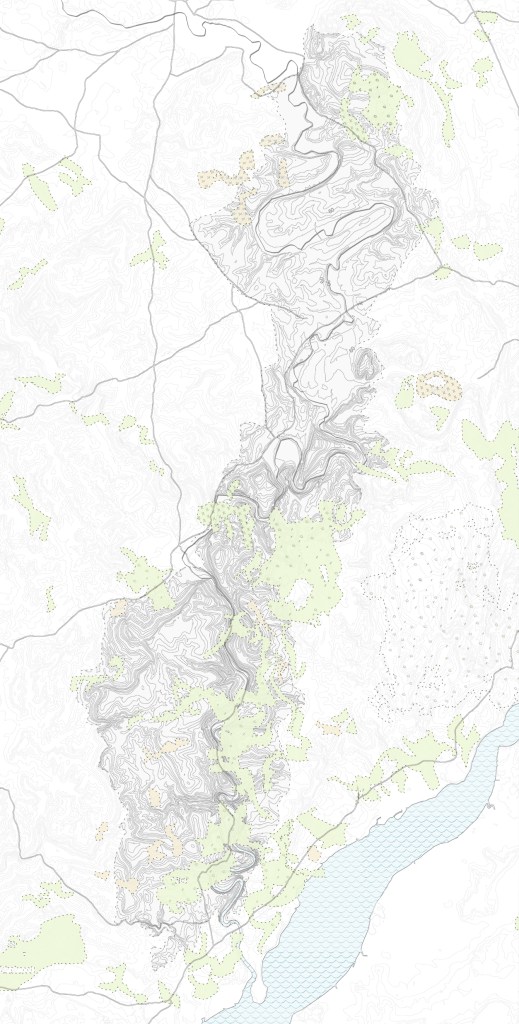
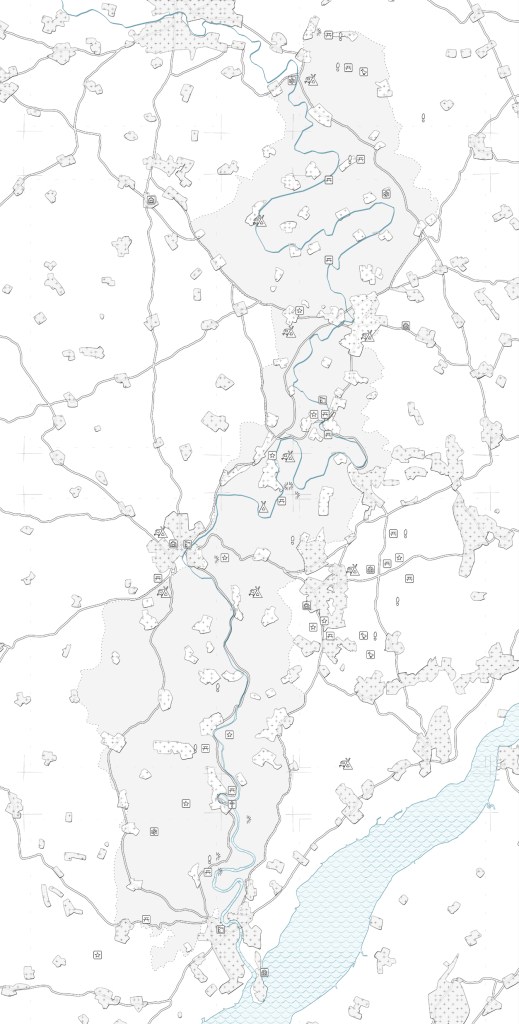
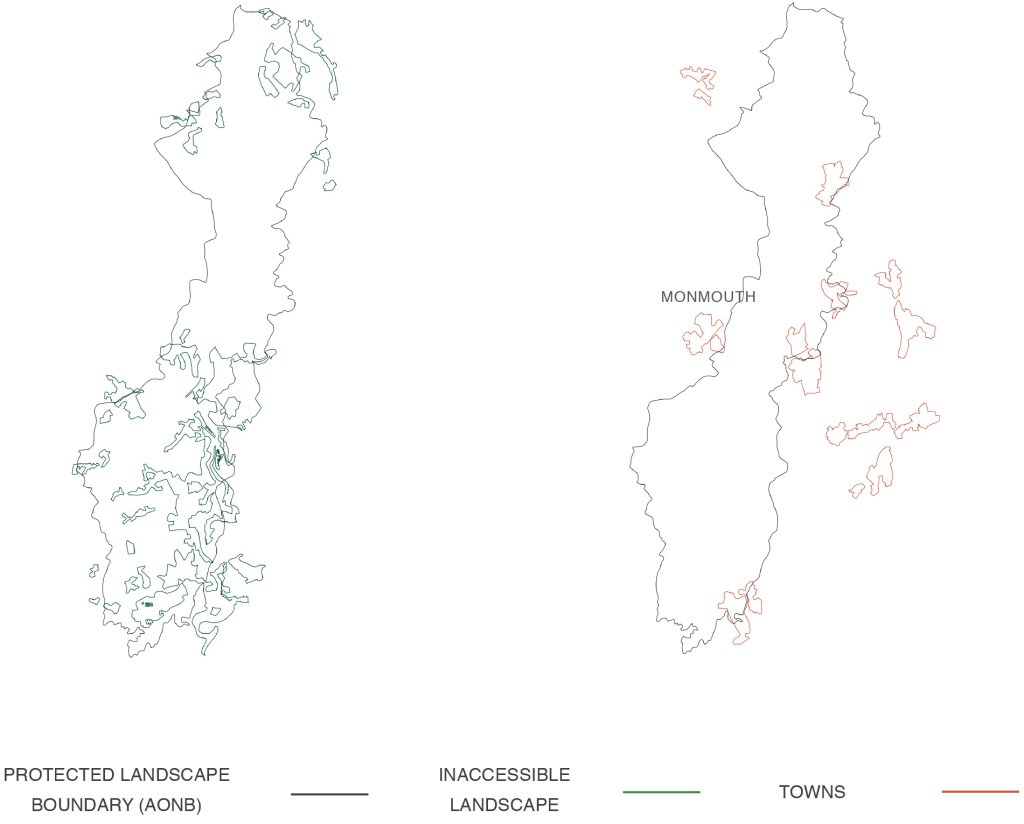
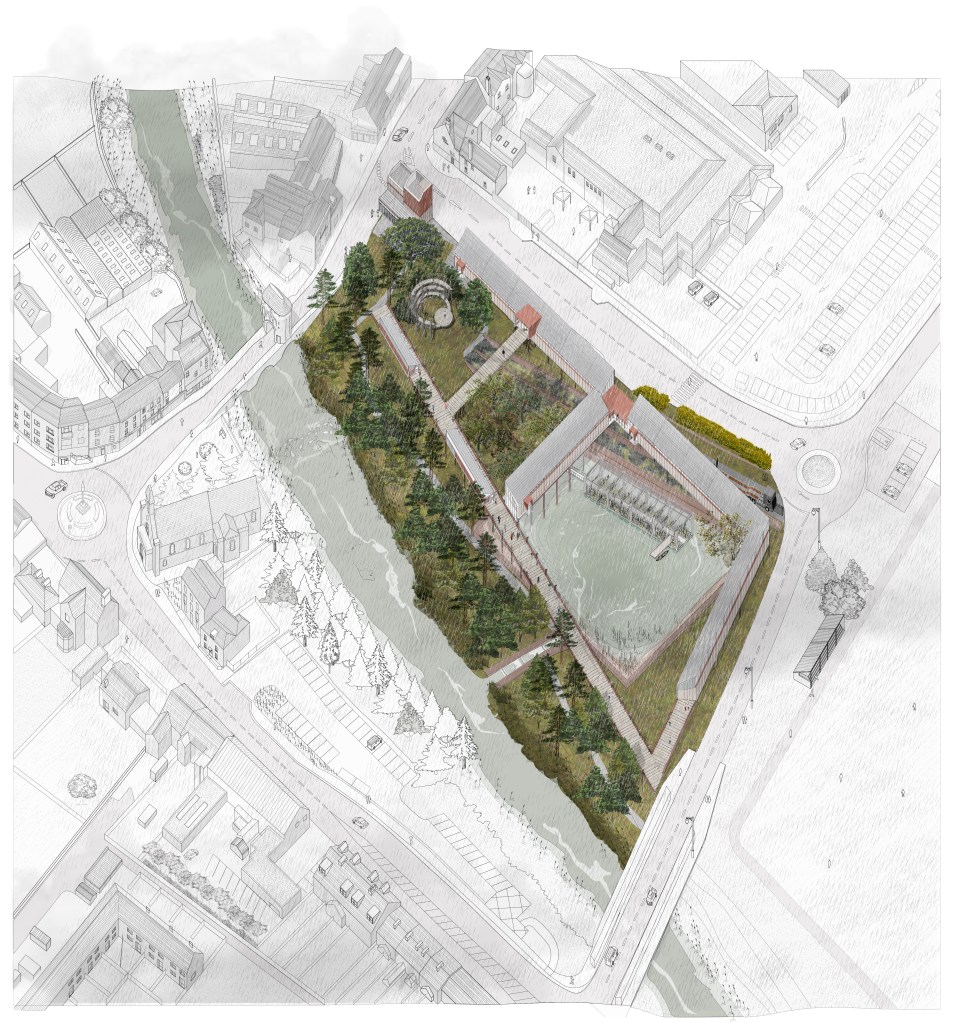
The road that takes us from the wooded heart of the Wye valley to the Welsh town of Monmouth tells a story that goes from the picturesque to the Anthropocene. The town sits on the edge of its county, on the border between a protected landscape and a multitude of small rural agricultural centres. This project is an attempt to investigate both of these realities and to provide a place where they can encounter one another.
The scheme imagines the implementation of a series of “Contemporary Commons,” spaces designed to foster a new heightened environmental awareness in service of overcoming the many dualities that this place has inherited.
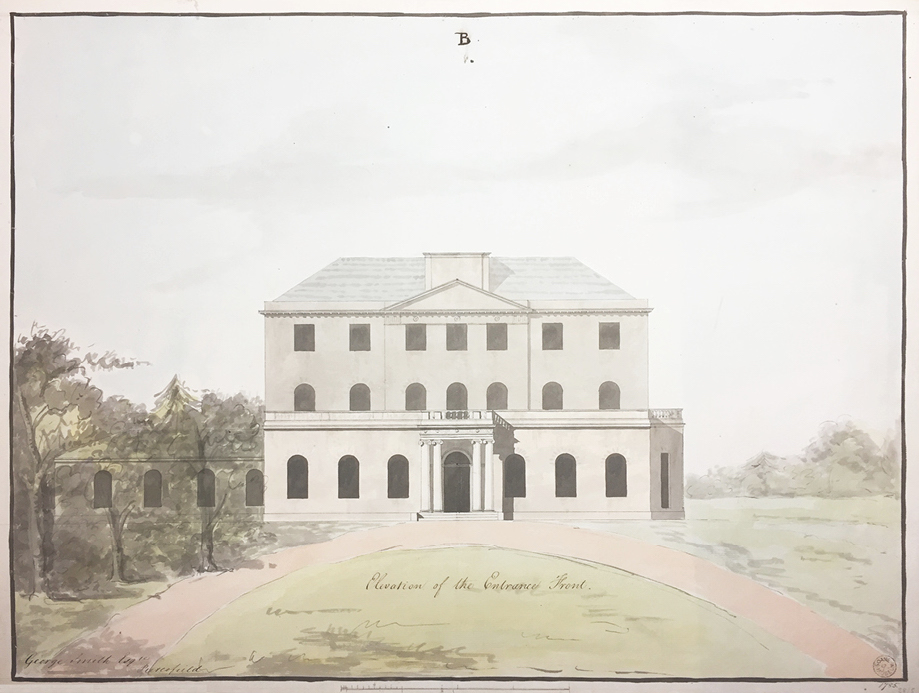
1. Piercefield Estate Elevation Study, 1785. Sir John Soane’s Library
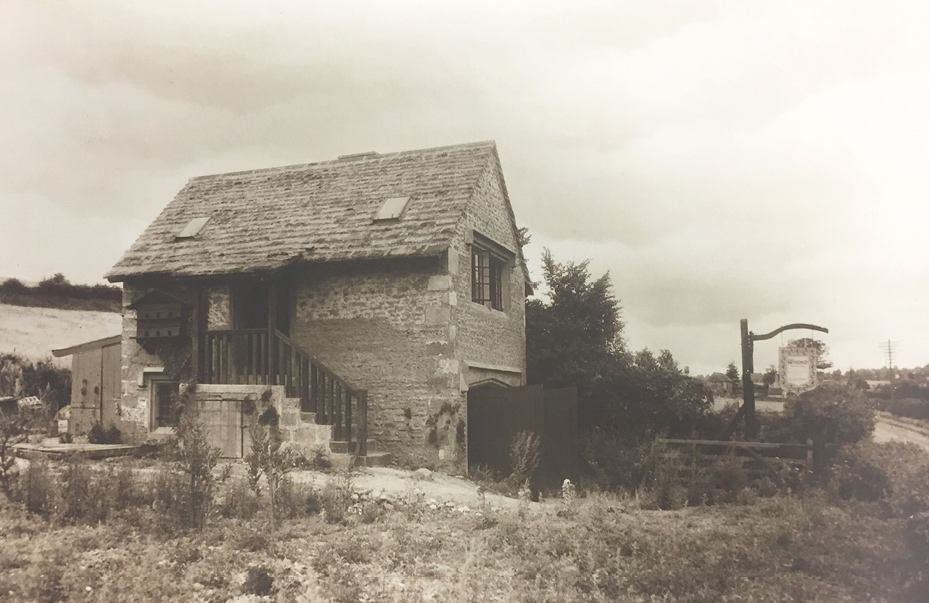
2. The Whitchurch development, 1931. Patrick Abercrombie’s Archival Photograph from the Special Collection Library at the University of Liverpool.
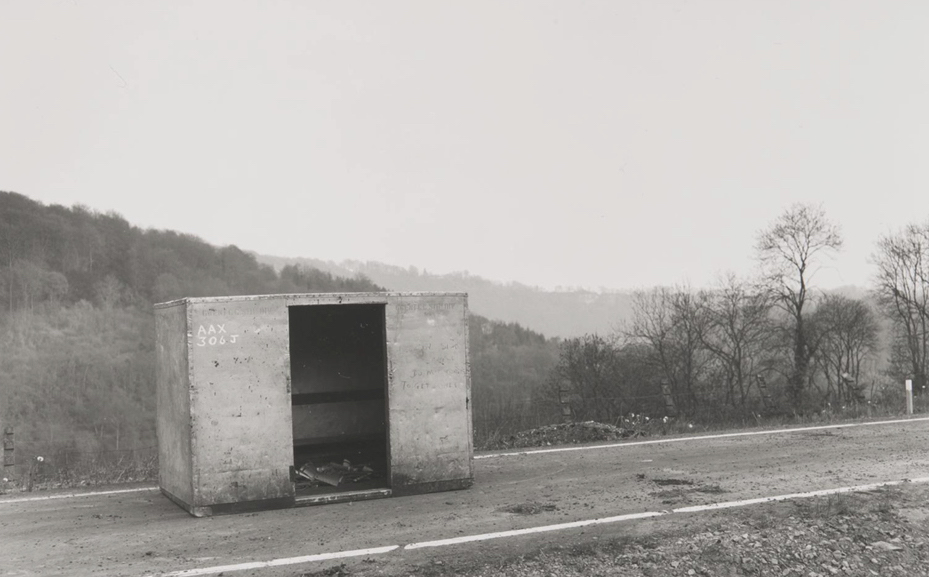
3. Keith Arnatt, Part of the collection ‘A.O.N.B (Area of Outstanding Natural Beauty)’ 1982-1984. Tate Britain – Prints and Drawings Room

4. Flooded Monmouth in the early 20th century. Taken from ‘Monmouth and the River Wye in Old Photographs: From Goodrich to Brockweir’.

THE PROJECT
The project is intended to secure the community’s ability to access public funds available for ecologically sustainable landscape management, allowing it to support efforts to improve soil health, plant trees, and mitigate climate change.
Under this new “natural capital” scheme, developed as a collaboration between the Monmouthshire Council, the forestry commission and Natural Resources Wales, the region’s air, water, soil, and biodiversity will be re-imagined as an essential economic resource.
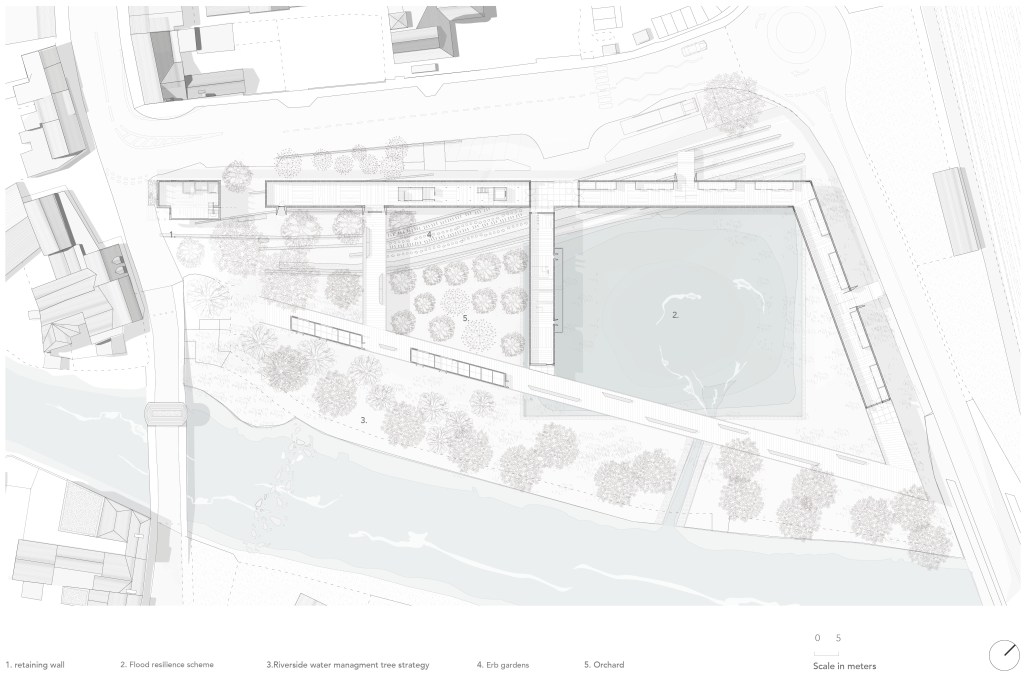



THE FORM
The architecture, taking on the form of the Stead, shows nucleated settlements in groups of two or three where a work of ‘replication’ takes place. Like the growth of natural elements, the buildings elements will replicate themselves, ready for a copy to be taken to secondary sites.
Following the local vernacular tradition, the agrarian buildings will be used to store and work the woodland and the landscape and to shelter what the community produces, whilst also affording the flexibility to adapt the spaces to educational purposes. During this phase, the temporary replica structures will start to move to the new sites. What will be left are traces of the previous insertions. These remains will be left in places where they have adapted or responded to the urban aspects of the site.
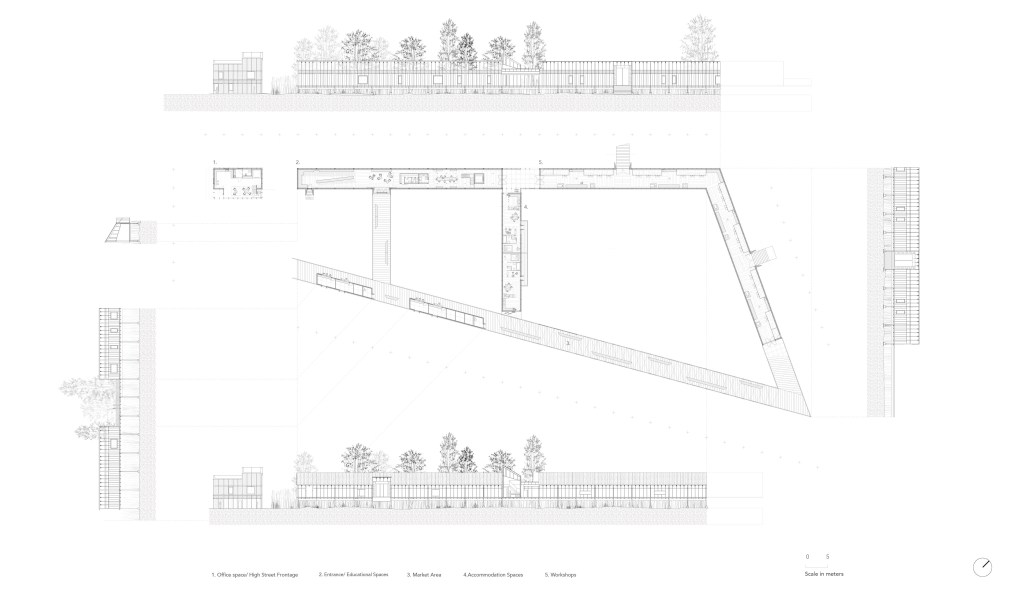


THE QUOTIDIAN
By responding to the town’s historical use of local materials in transforming the landscape, the project will reveal both the resilience and weaknesses of Welsh materials and building methods. The result is a temporary architecture of enclosures, one that acts as a critique of contemporary landscape urbanism, whose modernist perspective usually rejects enclosure in favour of an open space vision inspired by eighteenth-century picturesque landscape design.
This project is but the first step in developing a new vision for a constructed landscape that is self-conscious of its own artifice, one that does not indulge in the pretence that nature is a foreign and wild object, but seeks to draw a bridge between it and ourselves. Ultimately, this is the only way that our practice can begin to live up to the demands of the Anthropocene.



 MARCO FIORINO